Single-Pane vs. Double-Pane Windows: Which Is Better for Toronto Homes in 2026?
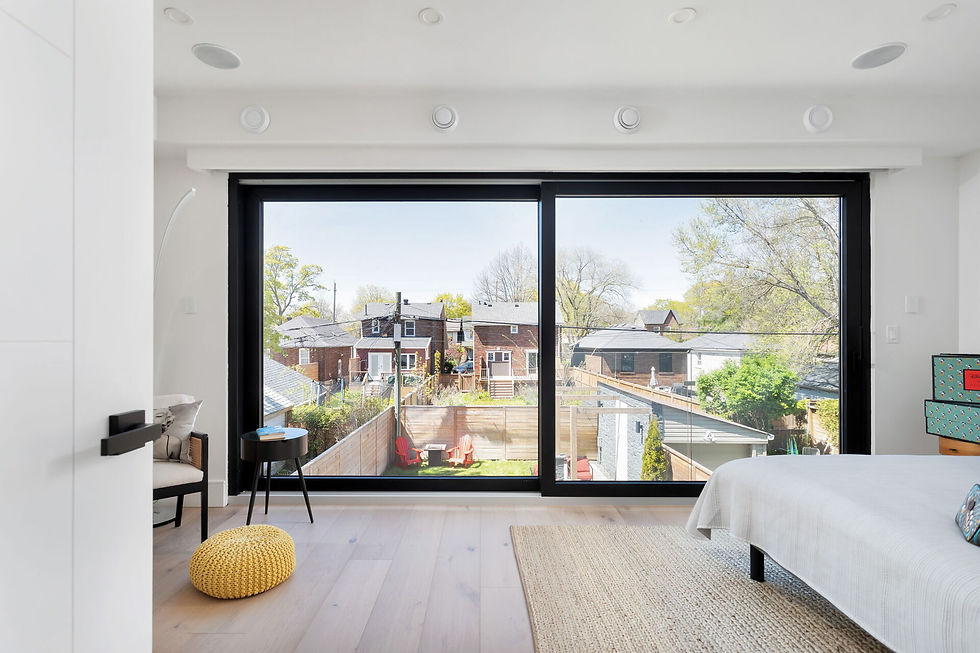
If you are comparing single-pane vs. double-pane windows, the short answer is simple: a properly specified and installed double-pane window is the better choice for almost every heated home in Toronto and Southern Ontario.
A single-pane window contains one layer of glass. A double-pane window—also called a double-glazed window or insulated glass unit—uses two layers of glass separated by a sealed space. That space, combined with features such as low-emissivity glass, argon gas and a warm-edge spacer, reduces heat transfer and improves indoor comfort.
For a Toronto home exposed to cold winters, humid summers and large seasonal temperature changes, double-pane windows generally provide:
Better energy performance
Warmer interior glass during winter
Less radiant discomfort and fewer drafts when the assembly is properly air-sealed
Better resistance to interior surface condensation
Improved sound control when the glass and frame are appropriately specified
Performance better suited to modern renovations and new construction
Homeowners sometimes search for “single-plane vs. double-plane windows.” The correct industry term is pane, referring to each sheet of glass.
What Is a Single-Pane Window?
A single-pane window has one layer of glass separating the interior of the home from the outdoors. These windows are common in older Toronto houses, detached garages, sheds, seasonal rooms and some historic properties.
The glass itself provides very little insulation. During winter, indoor heat moves toward the cold exterior more easily, and the inside surface of the glass can become uncomfortably cold. During summer, outdoor heat and solar energy can contribute to overheating.
Single-pane windows may also have older frames, loose sashes, failed putty, worn weatherstripping or unsealed rough openings. Those conditions can create air leakage that makes the window perform even worse. It is important to separate two issues:
Heat transfer through the glass and frame
Air leakage around the sash, frame and installation joint
Adding another pane improves the first issue, but the window still needs proper seals and installation to control the second.
When can a single-pane window still make sense?
Single-pane glass may remain appropriate in limited situations, including:
An unheated garage, shed or accessory structure
An interior decorative opening
A seasonal space that is not part of the conditioned building envelope
A heritage window being conserved with an approved interior or exterior storm-window strategy
A temporary repair before a larger renovation
For a primary window in a year-round heated home, however, single-pane glass is generally a poor fit for Toronto’s climate.
What Is a Double-Pane Window?
A double-pane window uses two sheets of glass around a sealed cavity. The complete sealed component is commonly called an insulated glass unit, or IGU.
A modern double-pane window may include:
An exterior pane of glass
An interior pane of glass
A sealed cavity between the panes
Argon gas or another inert gas within the cavity
One or more low-E coatings
A perimeter spacer that maintains separation between the panes
Primary and secondary seals that protect the cavity
A frame and sash designed to manage heat, air and water
The space between the panes slows heat transfer. A low-E coating can further reduce radiant heat flow, while argon gas can improve performance compared with ordinary air when the unit is properly manufactured and remains sealed.
Natural Resources Canada advises that windows used in Canada should be at least double-glazed and identifies low-E glass, inert gas fills and insulated spacers as important energy-efficient window features. Its guidance also notes that better-performing double-glazed windows can reach whole-product U-factors around 1.2 W/m²·K, although the actual rating depends on the complete product—not only the glass.
Why Double-Pane Windows Perform Better in Toronto
1. Lower heat transfer
Heat naturally moves from warmer areas to colder areas. In winter, that means heat tries to escape from the home. A single layer of glass offers limited resistance. A double-pane unit adds a sealed space that slows this transfer.
This does not mean a double-pane window is “twice as efficient” as a single-pane window. Window performance depends on the glass coatings, cavity width, gas fill, spacer, frame, sash, operating style, size and installation. The correct comparison is the certified whole-window rating.
2. Better comfort near the window
Comfort is not determined by thermostat temperature alone. A person sitting near cold single-pane glass can lose body heat toward that surface and feel chilled even when the room air is warm.
Because the interior surface of a good double-pane unit generally stays warmer in winter, the area beside the window can feel more comfortable. This can make a noticeable difference in bedrooms, living rooms, dining areas and window-seat locations.
3. Improved condensation resistance
Condensation forms when moist indoor air contacts a surface cold enough for water vapour to condense. Single-pane glass becomes colder more easily, so interior condensation and frost are more likely during Toronto winters.
Double-pane glass usually keeps its indoor-facing surface warmer and therefore improves condensation resistance. However, it cannot eliminate every moisture problem. Condensation can still occur because of:
Excessive indoor humidity
Weak air circulation near the glass
Closed blinds or heavy drapes
Missing heat supply near a large window
Thermal bridging through the frame or spacer
Air leakage around the unit
Extremely cold outdoor conditions
A failed sealed glass unit
Persistent window condensation should be treated as a building-performance warning, not simply wiped away and ignored. Moisture can damage wood trim, drywall, paint and adjacent wall assemblies.
4. Better summer performance with the correct glass package
Double glazing can reduce heat transfer, but summer comfort also depends on solar heat gain coefficient, or SHGC. SHGC measures how much solar energy passes through the complete window. A lower number admits less solar heat; a higher number admits more.
The best SHGC is not automatically the lowest one available. Window orientation, overhangs, tree cover, glazing area and room use should guide the selection:
West-facing glass may need stronger solar control to reduce late-afternoon overheating.
Large south-facing windows may benefit from carefully designed overhangs and a glass package that balances winter gain with summer protection.
North-facing windows receive less direct sun and may prioritize a low U-factor.
Natural Resources Canada notes that low-E coatings can reduce heat loss in winter and heat gain in summer by up to 30%, depending on the product and application.
5. Potentially better noise control
Double-pane windows usually provide better sound control than basic single-pane windows, but pane count alone does not make a window “soundproof.” Traffic, aircraft and low-frequency noise require a more deliberate acoustic design.
Important variables include:
Different glass thicknesses on the inner and outer panes
A wider or optimized air space
Laminated acoustic glass
The window’s operating type
Compression seals and air leakage
Frame construction
Installation and perimeter sealing
The wall assembly surrounding the window
If exterior noise is a major concern, ask for tested STC and OITC data for the proposed complete assembly. OITC is particularly relevant to lower-frequency outdoor noise such as traffic.
How to Compare Window Energy Ratings in Canada
Do not choose a window by pane count or centre-of-glass performance alone. Compare the certified ratings for the entire window, including its frame, sash and glass.
U-factor
The U-factor measures the rate of heat transfer through the complete product. Lower is better. A low U-factor generally means the window loses heat more slowly.
Energy Rating (ER)
Canada’s Energy Rating is a unitless value that balances U-factor, solar heat gain and air leakage. Higher is better when comparing products of the same type and size under the rating system.
Solar Heat Gain Coefficient (SHGC)
The SHGC indicates how much solar heat enters through the window. Neither high nor low is universally best; it should suit the elevation, room, shading and energy design.
Air leakage
Air leakage measures how much air passes through the tested window assembly. Lower leakage is generally better for comfort and energy use. Fixed windows are commonly tighter than operable windows, while casement and awning units often achieve strong compression seals when properly adjusted.
Visible transmittance
Visible transmittance indicates how much visible daylight passes through the glass. Coatings and tints that control solar heat can also affect light levels, so the full design should balance efficiency, daylight and appearance.
In Canada, window energy performance is tested under the CSA A440.2 framework. ENERGY STAR labels can show the product’s certified U-factor, Energy Rating and other information. Natural Resources Canada says ENERGY STAR certified windows are about 20% more energy efficient than the average window, but actual household savings vary with climate, home design, existing windows, installation quality and occupant behaviour.
Does Ontario’s Building Code Require Double-Pane Windows?
The safest answer is: Ontario code compliance is based on the required performance of the building and window assembly, not simply the number of panes.
Ontario’s 2024 Building Code came into effect on January 1, 2025. For a new home, addition or permitted renovation, the applicable energy-efficiency requirements and the approved design documents must be followed. Depending on the project, window performance may be coordinated through the architectural drawings, specifications and energy-compliance documentation.
A product should never be approved for a project merely because a supplier calls it “double-pane.” Two double-pane windows can have very different U-factors, air-leakage ratings, solar performance and installation details.
Before ordering windows for permitted work, confirm:
The required whole-product performance rating
The glass package and low-E coating
Window sizes and operating types
Bedroom egress requirements where applicable
Safety-glazing requirements near doors, stairs, tubs and other hazardous locations
Structural requirements for enlarged or relocated openings
Exterior flashing, drainage and water-management details
Whether the product matches the approved permit and energy documents
The building permit drawings, applicable code provisions and project-specific energy design should control the final selection.
Single-Pane vs. Double-Pane Window Cost
Single-pane glass is less expensive as a basic material, but it is not usually the best value for a conditioned Toronto home. Double-pane windows cost more because they use an insulated sealed unit, additional glass, spacers, seals, coatings and more sophisticated manufacturing.
The installed price of a replacement window depends on much more than the number of panes:
Window dimensions and quantity
Fixed, casement, awning, slider, tilt-and-turn or other operating style
Vinyl, fibreglass, wood, aluminum-clad wood or thermally broken aluminum frame
Standard, tempered, laminated, tinted or decorative glass
Low-E coating and gas fill
Retrofit insert versus full-frame replacement
Interior casing, jamb extensions and paint repairs
Exterior aluminum capping, masonry or stucco repairs
Access, height, scaffolding and site protection
Structural changes to the rough opening
Water damage or concealed deterioration
Permit and design requirements when openings change
For this reason, a credible contractor should inspect the existing condition and provide a scope-specific quotation. A low unit price can become expensive if it excludes full-frame removal, rough-opening repairs, insulation, air sealing, flashing, trim or disposal.
Retrofit Insert vs. Full-Frame Window Replacement
Choosing double-pane glass is only one part of a successful upgrade. Homeowners must also decide how the window will be installed.
Retrofit or insert installation
A replacement unit is installed within the existing frame. This approach can reduce disturbance and cost when the original frame is square, dry, structurally sound and properly integrated into the wall.
Potential disadvantages include:
Reduced glass area
Existing concealed air or water leaks remain
Old frame deterioration may be covered rather than corrected
Thermal bridges at the original frame may remain
Full-frame replacement
The existing window and frame are removed back to the rough opening. This allows the installer to inspect the opening, repair deterioration, improve perimeter insulation and air sealing, and integrate the new flashing with the wall assembly.
A full-frame installation usually involves more labour and finishing, but it may deliver a better long-term result when the existing window system or surrounding construction is failing.
Can You Convert a Single-Pane Window to Double-Pane?
Sometimes, but not by simply adding a loose second sheet of glass to every existing sash.
Possible options include:
Replace the complete window. This is the most comprehensive option when the frame, sash, seals or installation are poor.
Replace the sash or glazing unit. This may work when the frame was designed to accept a compatible insulated glass unit and remains in good condition.
Install a low-E storm window. This can be a practical strategy for certain heritage or budget-sensitive applications where preserving the primary window matters.
The existing frame must be assessed for glass thickness, weight, drainage, structural capacity, hardware, clearances and perimeter condition. A sealed double-pane unit should not be improvised into a frame that was never designed for it.
What Does Fog Between Double-Pane Glass Mean?
Fog, haze or water droplets between the panes usually indicate that the insulated glass unit’s edge seal has failed and moisture has entered the cavity.
Once the seal fails, the unit may no longer perform as intended. Depending on the window, the solution may be to replace:
Only the insulated glass unit
The sash and glass
The complete window
Surface condensation on the room side is different from condensation between the panes. Interior surface moisture usually relates to glass temperature, indoor humidity and airflow; moisture trapped inside the IGU points to seal failure.
Double-Pane vs. Triple-Pane Windows
If double-pane windows outperform single-pane units, are triple-pane windows always best? Not automatically.
Triple-pane windows can offer a lower U-factor, warmer interior glass and improved condensation resistance. They may be worth considering for high-performance custom homes, large glazed areas, exposed elevations, bedrooms where comfort is critical or projects targeting very low energy use.
However, triple-pane units are heavier and usually cost more. They may also reduce solar gain and visible light depending on the coatings and glass package. For many Toronto renovations, a high-quality double-pane low-E window can provide an effective balance of cost, comfort and performance.
The right decision should be based on energy modelling, orientation, window-to-wall ratio, frame performance, HVAC design, budget and the project’s overall building-envelope target.
When Should You Replace Single-Pane Windows?
Replacement may be worth prioritizing when you notice several of the following:
Cold interior glass or frost during winter
Persistent condensation and damaged trim
Noticeable drafts around the sash or frame
Windows that rattle, stick or no longer lock correctly
Rot, corrosion or failed exterior seals
Water staining around the opening
High exterior noise
Rooms that overheat in summer or feel difficult to heat in winter
A renovation that will already disturb interior or exterior finishes
Window openings that are being enlarged, relocated or reconfigured
Do not assume every comfort problem is caused by the glass. Missing wall insulation, attic leakage, poor duct distribution, unbalanced HVAC, high indoor humidity and inadequate air sealing can create similar symptoms. A good renovation plan assesses the home as a system.
What to Ask for When Buying Double-Pane Windows in Ontario
Use this checklist before signing a window contract:
Is the performance rating for the complete window or only the glass? Request whole-product values.
What are the U-factor and Energy Rating? Compare equivalent sizes and operating types.
Which low-E coating is included? Confirm that it suits the window orientation and project design.
Is the cavity argon-filled? Ask whether the gas fill is included in the quoted specification.
What spacer system is used? A better edge system can improve perimeter temperature and condensation resistance.
What frame material and reinforcement are included? Evaluate thermal performance, durability, colour, profile and maintenance.
What installation method is priced? The quote should distinguish insert replacement from full-frame removal.
How will the opening be air-sealed and waterproofed? Ask about insulation, membranes, flashing, drainage and sealants.
What interior and exterior finishes are included? Confirm casing, jambs, paint, capping, masonry and disposal.
What warranties apply? Separate product, insulated-glass-seal, hardware, finish and labour coverage.
Does the product match the permit and energy documents? Verify before fabrication because custom windows may be difficult to change or return.
Is acoustic performance tested if noise is a priority? Ask for STC or OITC data rather than relying on general marketing language.
Common Window-Buying Mistakes
Avoid these frequent mistakes during a custom home or renovation:
Comparing only the number of panes
Selecting the same SHGC for every elevation without considering orientation
Using centre-of-glass values instead of whole-window ratings
Assuming every low-E coating performs the same way
Choosing a window before confirming rough-opening dimensions
Ordering before structural and architectural revisions are complete
Overlooking bedroom egress and safety-glazing requirements
Ignoring exterior flashing and drainage
Installing a premium glass unit in a poorly insulated or leaking frame
Assuming double-pane glass alone will soundproof a room
Failing to coordinate window sizes with millwork, plumbing, HVAC, roofing or exterior cladding
Accepting a quote that does not clearly define trim, repairs and disposal
Are Double-Pane Windows Worth It in Toronto?
For most heated Toronto homes, yes. The practical benefit is not limited to a utility-bill calculation. Double-pane windows can improve comfort, reduce cold interior surfaces, help control condensation and support a better-performing building envelope.
The strongest value comes from selecting the right complete window and installing it correctly. A poorly flashed, inadequately sealed or badly sized double-pane window can still leak air or water. A high-performance product needs a high-quality opening and installation.
Final verdict
Choose single-pane glass mainly for unconditioned, secondary or specialized heritage applications.
Choose double-pane low-E windows for most Toronto renovations, additions and conventional custom homes.
Consider triple-pane windows when the project has higher performance goals, large areas of glazing or demanding comfort conditions.
Compare certified whole-window ratings and installation scope—not pane count alone.
Frequently Asked Questions
What is the difference between single-pane and double-pane windows?
A single-pane window has one sheet of glass. A double-pane window has two sheets separated by a sealed cavity that may contain argon gas. The extra pane and sealed space reduce heat transfer and generally improve comfort and condensation resistance.
Is “double-pane” the same as “double-glazed”?
Yes. In typical residential use, both terms describe a window or glass unit with two layers of glass. “Insulated glass unit” refers more specifically to the sealed glass assembly.
Are double-pane windows better in winter?
Yes. A properly specified double-pane window generally loses heat more slowly and maintains a warmer interior glass surface than a single-pane unit. This can reduce cold-surface discomfort and improve condensation resistance.
Do double-pane windows keep a house cooler in summer?
They can, especially when paired with an appropriate low-E coating and solar heat gain coefficient. Orientation, shading, window size and installation also affect summer performance.
Do double-pane windows reduce noise?
Usually, but results vary. Glass thickness, air-space width, laminated glass, seals, frame construction and installation can matter as much as the second pane. For serious noise problems, request tested STC and OITC ratings.
Can double-pane windows still develop condensation?
Yes. Room-side condensation can still occur when indoor humidity is high or the glass becomes cold. Condensation between the panes usually indicates a failed insulated-glass seal.
Is argon gas necessary in double-pane windows?
Argon is not the only possible fill, but it is commonly used to improve thermal performance. Its value depends on proper manufacturing, cavity design and long-term seal integrity.
Is low-E glass worth it in Ontario?
For most conditioned homes, low-E glass is a valuable component of an energy-efficient window. The coating should be selected for the home’s climate, orientation, glazing area and solar-control needs.
Does adding a second pane fix drafts?
Not necessarily. Drafts often come from worn weatherstripping, poor sash seals or gaps around the frame. The glass package and air-sealing strategy must both be addressed.
Can I replace only the glass instead of the whole window?
Sometimes. If the frame and sash are sound and compatible, an insulated glass unit may be replaceable. Full replacement is usually more appropriate when the frame, hardware, flashing or rough opening has failed.
Are triple-pane windows better than double-pane windows?
Triple-pane windows can perform better thermally, but they cost and weigh more. The right choice depends on the building-envelope target, orientation, comfort goals, HVAC design and budget.
How can I tell whether a window is single-pane or double-pane?
Look at the edge of the glass for a spacer between two layers. You may also see two distinct reflections when holding a light near the glass. A manufacturer’s label or product documentation is the most reliable confirmation.
Do new windows automatically lower energy bills?
Not by a guaranteed amount. Savings depend on the condition of the old windows, total window area, air leakage, insulation, HVAC efficiency, energy prices, installation quality and how the home is operated.
Plan Your Windows as Part of the Whole Home
Windows affect far more than the exterior appearance of a house. They influence heat loss, solar gain, natural light, ventilation, furniture layouts, cladding details, interior trim, structural openings and HVAC loads.
For a custom home, addition or major renovation, window decisions should be coordinated before construction—not left until a supplier asks for final measurements.
416 Construction provides coordinated design-build services across Toronto and the GTA, including architectural planning, engineering coordination, building-permit documentation, energy-efficiency coordination and full construction. Our team can help align window sizes, performance specifications, structural openings, exterior details and interior finishes so the complete assembly works as intended.
Planning a custom home or renovation in Toronto, North York, Etobicoke, Scarborough, Mississauga, Oakville or Burlington? Contact 416 Construction to discuss the drawings, approvals, window package and construction scope as one coordinated project.


Comments